The Island of Misery
I re-watched “When Father Was Away on a Business Trip” for the umpteenth time yesterday. It was the second film by the feted Yugoslav Director Emir Kusturica. Near all his movies are excellent, but the premise of this one always held a personal emotional connection for me.
It takes place in Bosnia in 1950 when the paranoid and repressive communist government of Yugoslavia was trying to brutally rid itself of “enemies of the regime.” There was fear of war with the Soviet Union, and of course paranoia sees traitors everywhere.
In a Bosnian village, young Malik’s father is the town drunk who carouses and sings Mexican songs. He’s afraid, with reason, that singing the innocent American or Russian songs of the day will land him in trouble with the authorities. But it doesn’t help him. He is arrested near the beginning of the story over a silly remark about a cartoon. Then he is sent from his village home to a labor camp. Malik, too young to understand, is only told that his father has gone on a business trip. When his father does finally come back, he is not the same man.
During this same period, about 1950, my dad’s brother in Belgrade was also arrested. His crime was telling a mild joke that the authorities chose to perceive as insulting to the regime and complimentary of the Soviet Union. It was neither. He never knew who reported him for the “crime” – perhaps a neighbor or a jealous co-worker looking to take his place. He left behind a pregnant wife, alone, not knowing the entire time where he was and if he would come back.
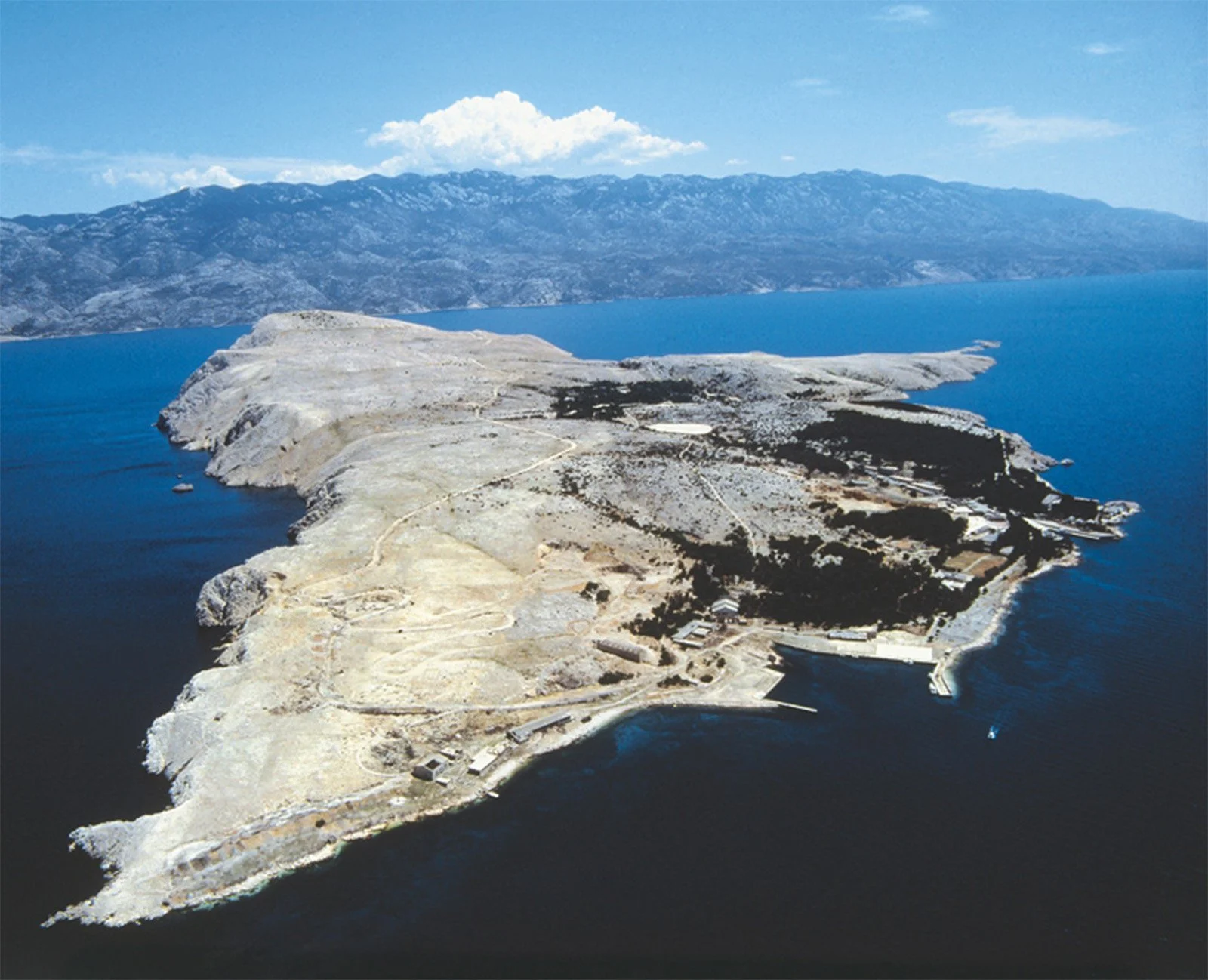
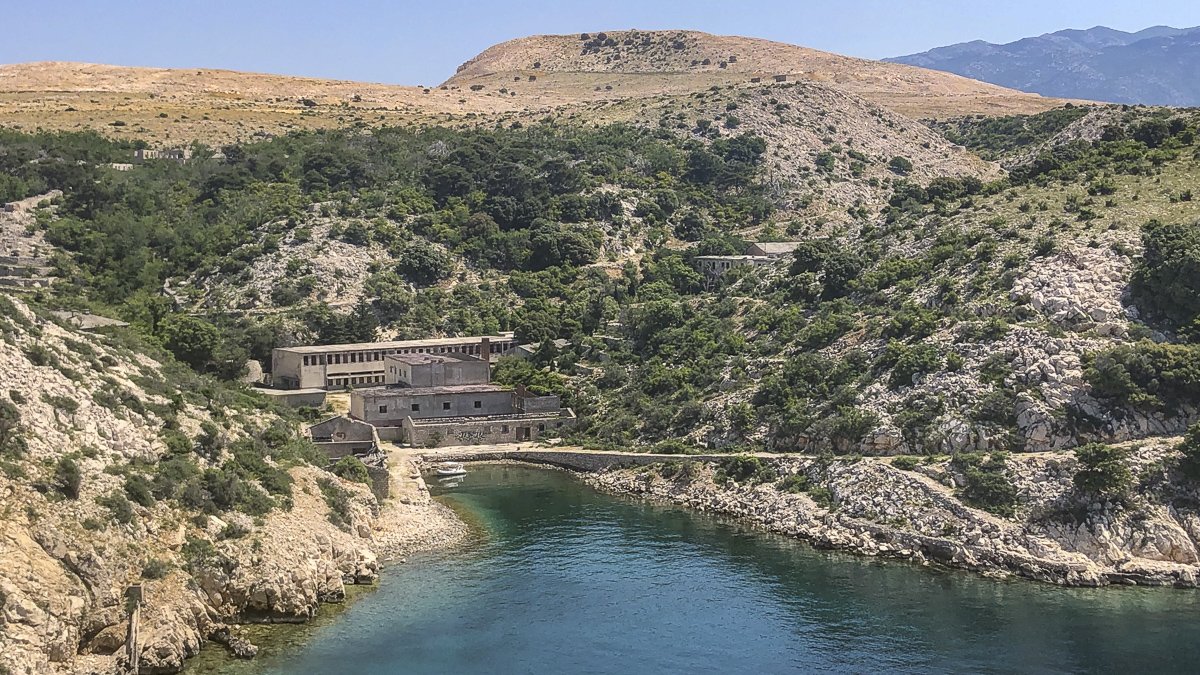
My uncle was sent to Goli Otok, an island off the coast of Croatia. Its name is translates into its actual description – a barren or naked island. Nothing grew on this 1.5 square mile except a fringe of dry vegetation at the edge and a lot of pain and misery. From 1949 to 1989, it was turned into a top-secret, high-security prison and labor camp. Men were sent here, and the women to a nearby island.
It was taboo to speak of Goli Otok. But that didn’t stop its reputation for horror from becoming widespread. Until 1956 it held chiefly “political” prisoners. Tito had severed ties with the Soviet Union, and anyone rightly or wrongly perceived as a Stalinist was a threat. Numbers are not always reliable when it comes to “secret” prisons. However, it is believed to have held 16,000 people during its miserable run. Thousands perished on that bitter island.
Goli Otok was an open-air torture prison, particularly painful because home and freedom were within sight across a short spit of water, so close and yet unreachable. The conditions on the island were brutal. Summer temperatures soared to over 100F, and winters brought the harsh Adriatic wind and freezing temperatures. Inmates were forced to work outdoors from dawn to dusk each day regardless of the weather. The work happened in a stone quarry, in metal works, or in wood processing. All the fruits of the prisoners' labor were used to create exports to enrich the party elite. The greedy always siphon to the top.
Worst of all, yet diabolically brilliant, the prison was run by the inmates, which created a hierarchical system. Unlike some Nazi camps, whose purpose was genocide, Goli Otok’s primary purpose was “re-education” through a punitive system. The inmates proved their loyalty to Tito and the party by inflicting pain on their fellow prisoners, thereby moving forward towards their own redemption. Those who rose to the top were expected to beat, shun, and denounce as traitors those below them. Most took the opportunity to condemn a fellow prisoner, rightly or wrongly, so they could move forward more quickly through "re-education" and hopefully return home. It was a grotesque mirror of the world they had left behind when they were sent to the prison.
Near the guard tower and in a specially dedicated pit, torture was administered, but it also happened above ground, in the open. Prisoners were forced to carry a boulder from one end of the island to the other, then make the return trip, frequently repeating the Sisyphean task all day long. They were regularly forced to walk the gamut of the “boulevard” – an outdoor corridor comprised of prisoners on each side who viciously beat their fellow prisoners as they came through. The goal was to flatter their jailers.
My uncle never spoke to me about what happened on Goli Otok. He always skirted the subject. That silence told its own story. Never that is until my last visit with him. Well into his 80s, he shared just a little of what he’d experienced. The little I heard was enough. His body was damaged at Goli Otok. And when he returned from the barren island, he had to take up life again as a husband, a father, and a producer for society.
Another uncle of mine was a young doctor at the time. He was sent to Goli Otok as a civilian to see the health situation there.
He also left behind a wife in Belgrade. My aunt was a medical student with a young child, and their friends shunned her because her husband had disappeared from Belgrade. They knew that those arrested by the secret police usually “disappeared” from Belgrade. And that it was best to avoid their families.
He was shocked and stunned by what he found there. After nine months, he returned home from what he called the worst time in his life. He recalled the “boulevard” vividly or, as it was also known, the inmate “machine.” Here fresh convicts were forced to walk that narrow space between inmates with the same greeting.
My uncle, a man of incredible principle, returned to Belgrade and expressed strongly to authorities above him what changes needed to be implemented at Goli Otok. Maybe it was because the situation regarding the Soviet Union had cooled, but the Yugoslav authorities implemented his suggestions, including abolishing the inmate “machine.”
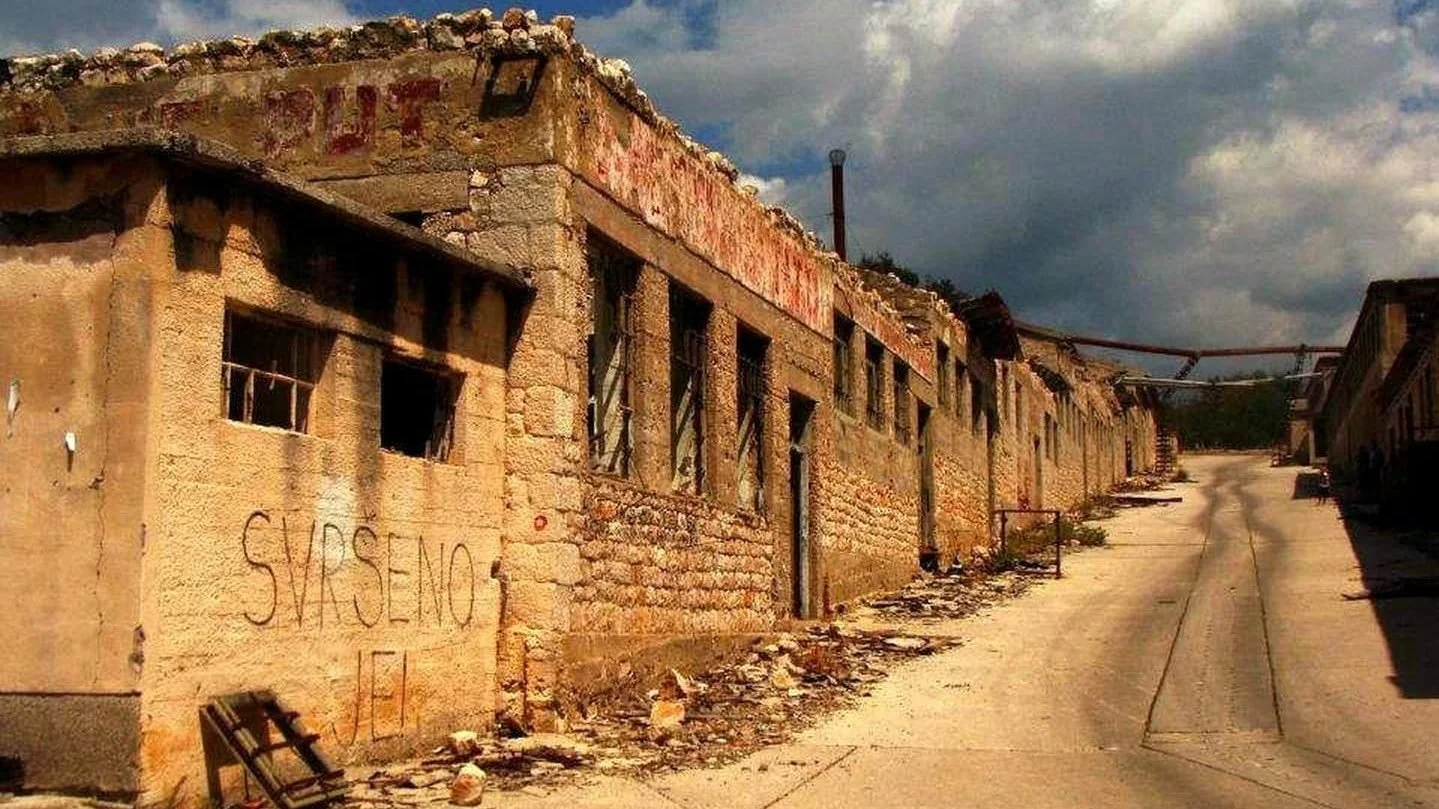
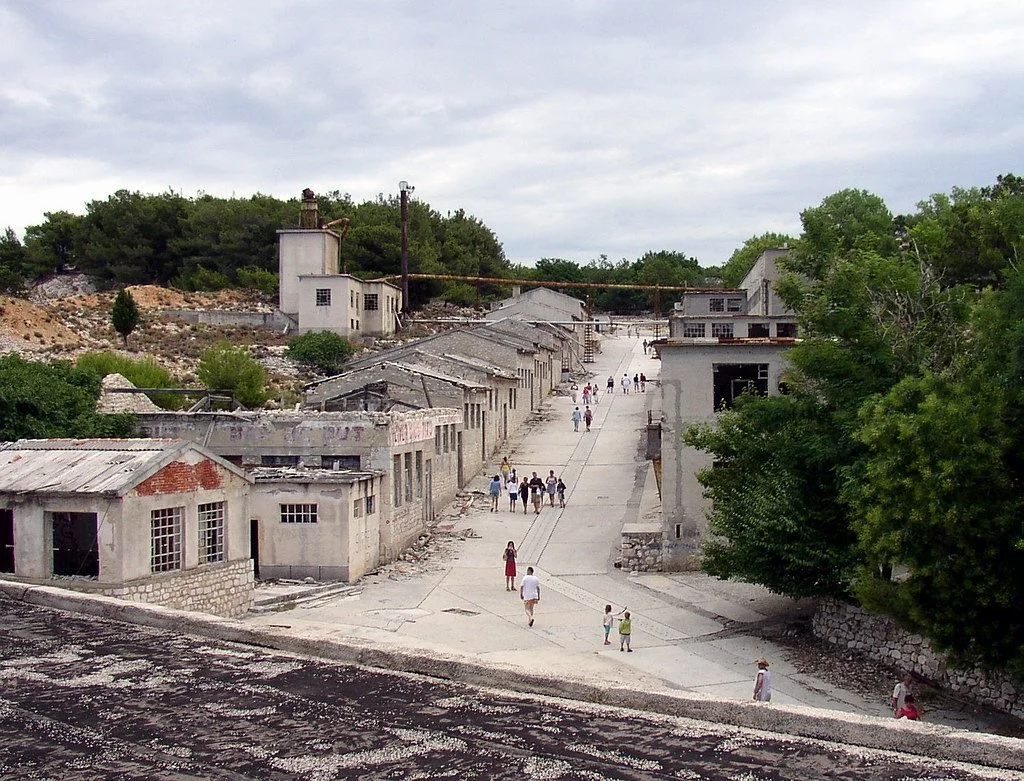
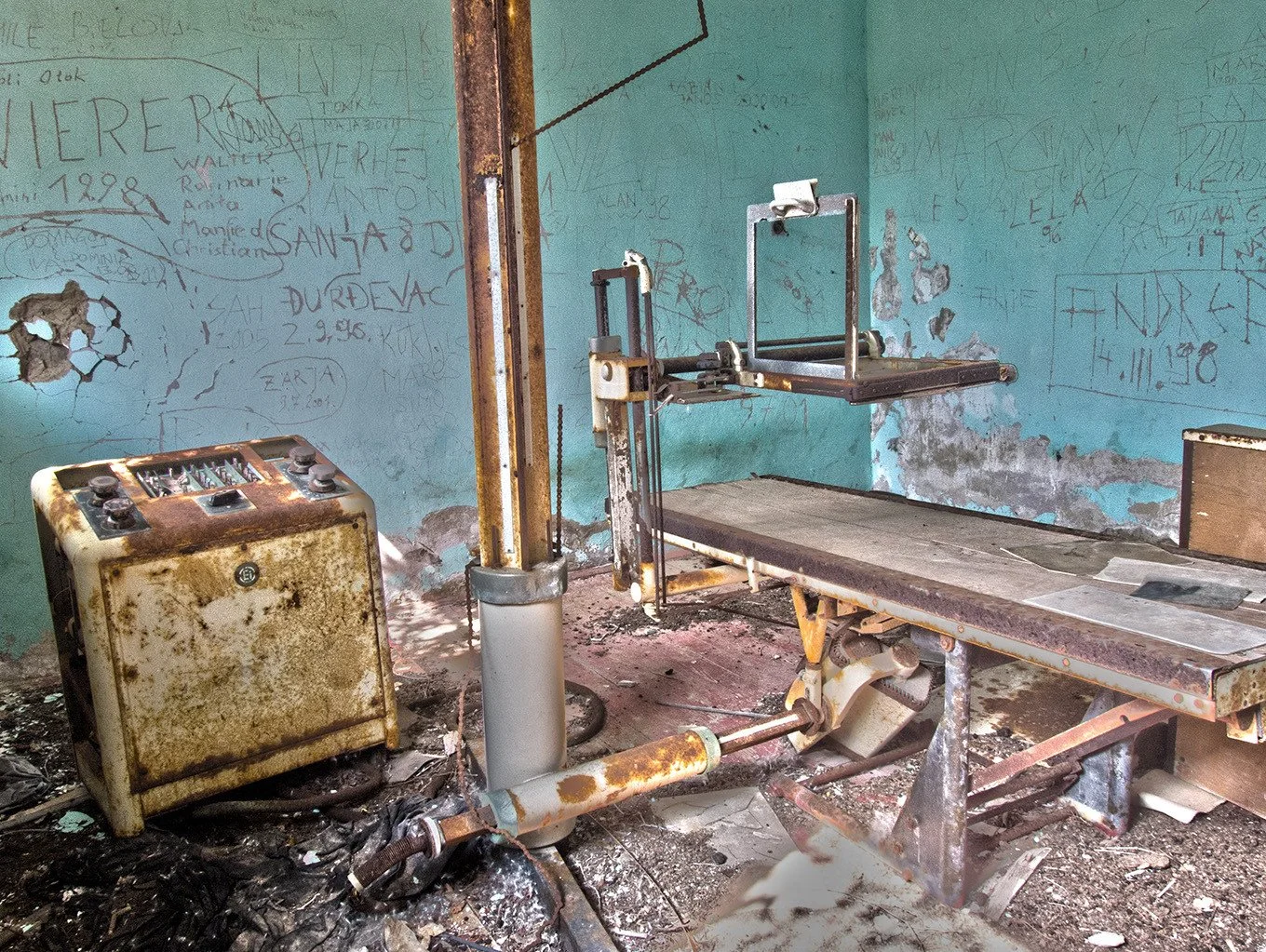
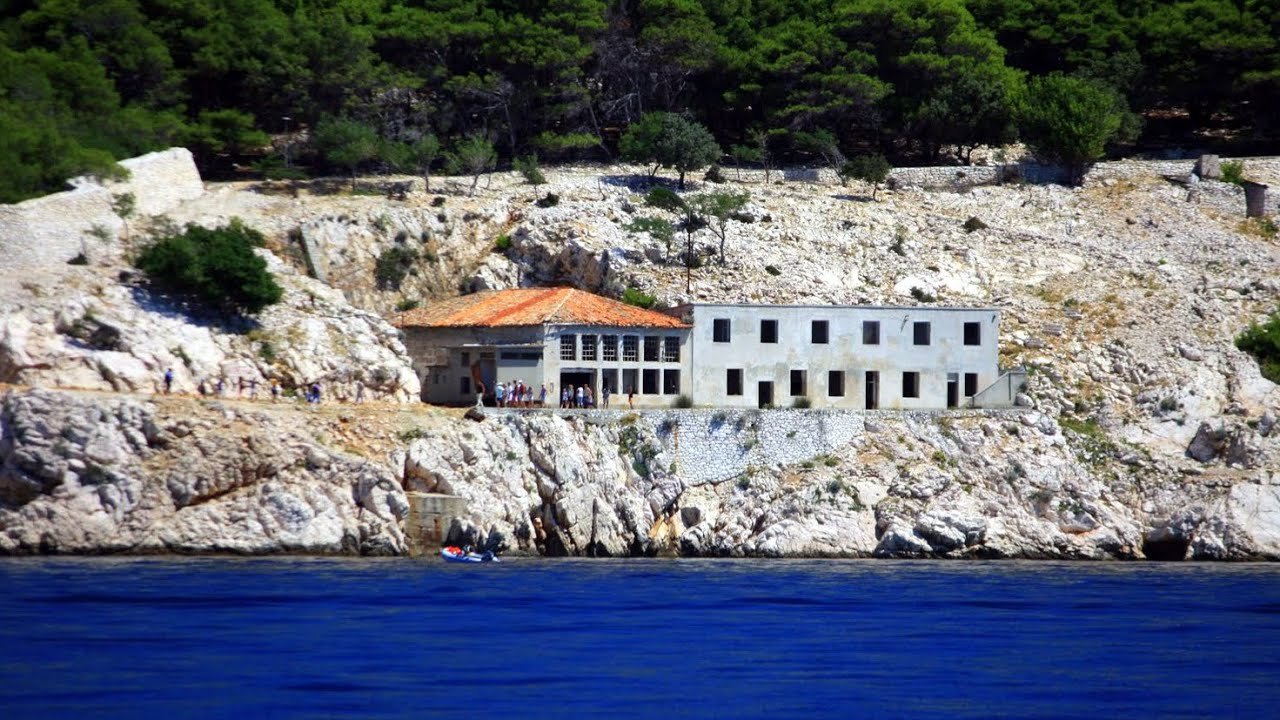
Goli Otok is now abandoned and desolate, but the ruins tell their story of terror. During the summer, tourist boats ply the waters on the short ride from the Croatian mainland to the island so you can see what man can do to his fellows if he’s given a chance.
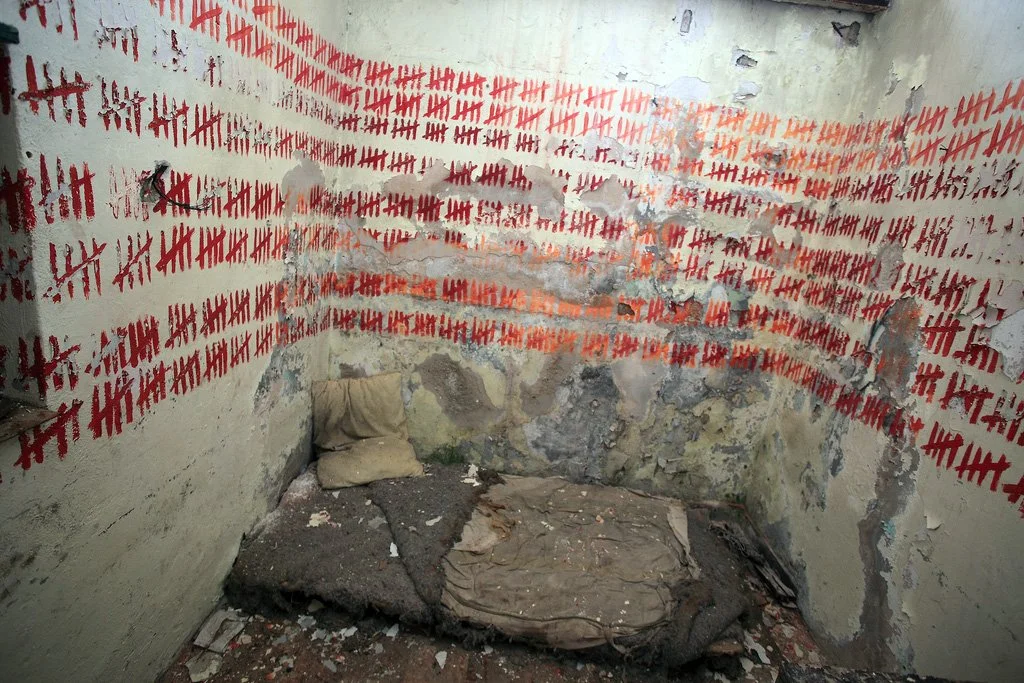
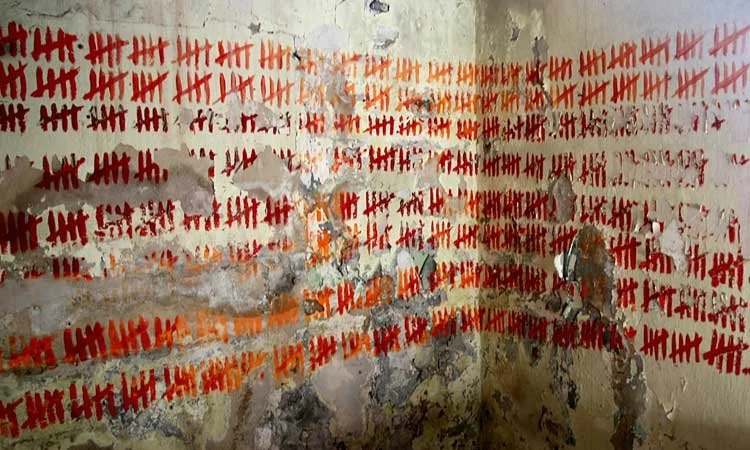
The photo above is of a prisoner's bed and cell, the days his incarceration enumerated in blood. The physical scars of some prisoners who survived Goli Otok healed and disappeared. For others, the scars lingered. But for all the inmates sent there, the psychological trauma remained with them for the rest of their lives. Just as it did for Malik’s fictional father. And my real-life uncle.